While most news about video game acquisitions usually involve Sony or Microsoft and their purchase of major outfits like Activision, Bungie or Bethesda, as well as countless smaller studios, the financial reality of video games goes the other way. Specifically, to Asia and Saudi Arabia, which are sharing the video game industry pie.
Saudi Arabia buys part of Embracer. One billion in Embracer shares has been the latest acquisition by Saudi Arabia’s Public Investment Fund. In practical terms, this means that the Saudi Arabian government owns 8.1 percent and 5.4 percent of the votes of the company that owns companies and studios such as THQ Nordic, Saber Interactive, or Gearbox Entertainment.
Saudi Arabia thus becomes the second largest owner of the company. Lars Wingefors, CEO of Embracer, has stated that they will establish “a regional hub in Saudi Arabia, from which we will be able to make investments in the entire MENA region, either organically, through partnerships, joint ventures or through company acquisitions.”
Saudi Arabia’s plan. Savvy Gaming Group is the subsidiary company of the Saudi Arabian Public Investment Fund that is in charge of these operations. It is a project of Mohammed Bin Salman, crown prince of the country, who wants the area to have revenues less dependent on oil. A plan that is being implemented on a shoestring, as the company has already made some thirty acquisitions.
To begin with, last year it invested 14.9 million shares in Activision, 7.4 million in EA and 3.9 million in Take-Two, for a total investment of 3 billion. It also acquired almost all of SNK, and significant parts of Capcom and Nintendo. And this same year, it invested $1.5 billion in the purchase of two major esports companies, ESL and the digital platform FACEIT. But that’s not all, because Embracer, in turn, owns multiple studios and companies that it has acquired over the years.
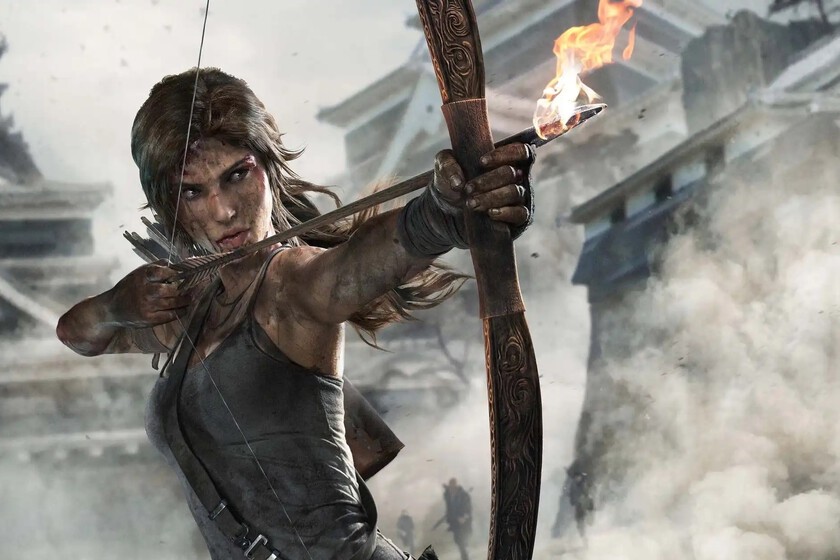
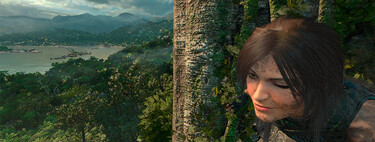
Among them, it has several IPs from THQ (‘Darksiders’, ‘Red Faction’, ‘Destroy All Humans’….), Deep Silver Dambuster (now with ‘Dead Island 2’), Deep Silver Volition (‘Saints Row’, ‘Red Faction’), the ‘Timesplitters’ IP, Saber Interactive (‘Evil Dead: The Game’), 4A Games (‘Metro’), Zen Studios (‘Pinball FX’), Flying Wild Hog (‘Shadow Warrior’), Gearbox (‘Borderlands’) or 3D Realms (‘Duke Nukem’) among many others. Embracer’s last and most notorious acquisition was that of Crystal Dynamics and Eidos-Montreal, in a purchase that cost 300 million dollars. IPs such as ‘Tomb Raider’, ‘Deus Ex’, ‘Legacy of Kain’ and ‘Thief’ were added to the company’s portfolio.
… and Tencent in China. Tencent was recently in the news when it became a majority shareholder in Spain’s Tequila Works. Tencent is the current big giant of video games, and has properties all over the world: Inflexion Games, Turtle Rock Studios (‘Back 4 Blood’) or the studios that have given it its most famous properties, Epic Games, creators of ‘Fortnite’, and Riot Games, owners of ‘League of Legends’.
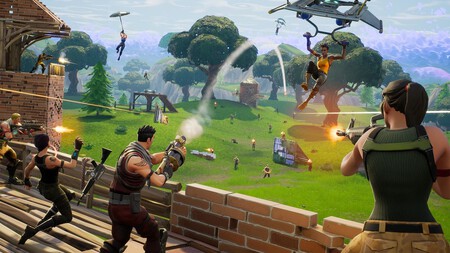
Tencent’s power and presence not only covers the world of video games, a sector where it already has 24 purchased studios and 76 intellectual properties. For example, it owns WeChat, which was launched in 2011 and is the most important messaging app in China. In total, Tencent owns more than 600 companies and has one million servers in operation. In January 2021, it declared its stock market value to be one trillion dollars (one trillion in Anglo-Saxon terms).
The dangers of this power conglomerate. China and Saudi Arabia are not the countries that can benefit the industry the most by agglomerating so many studios and intellectual properties. On the one hand, there are doubts about Mohamed Bin Saldan’s management to modernize the country, with suspicions that he had hacked Jeff Bezos’ cell phone, in a conspiracy linked to the murder of journalist Jamal Khashoggi. Controversies surrounding the hosting of competitions such as the Super Cup serve to dampen a number of problems stemming from the leader’s personality cult.
As for China, it is well known the permanent surveillance to which its citizens are subjected, the restrictions on fundamental freedoms (despite their relaxation since the seventies) and, for what interests us here, the absolute control of the industries that develop their activity in China. Positive aspects (the fight against video game addiction and the proliferation of titles with loot boxes) do not hide the absolute iron hand with which the government rules.
With measures limiting the number of hours that underage players can access video games in China, for example, comes controversy. Concern for public health hides measures to control the population, just as Saudi Arabia’s desire to modernize is only the tip of the iceberg of the facelift of an oppressive regime in aspects that have been denounced by human rights observers around the world. Countries with added complications, no doubt, for what, on the surface, only points to a mere conglomerate of brands linked to the video game.