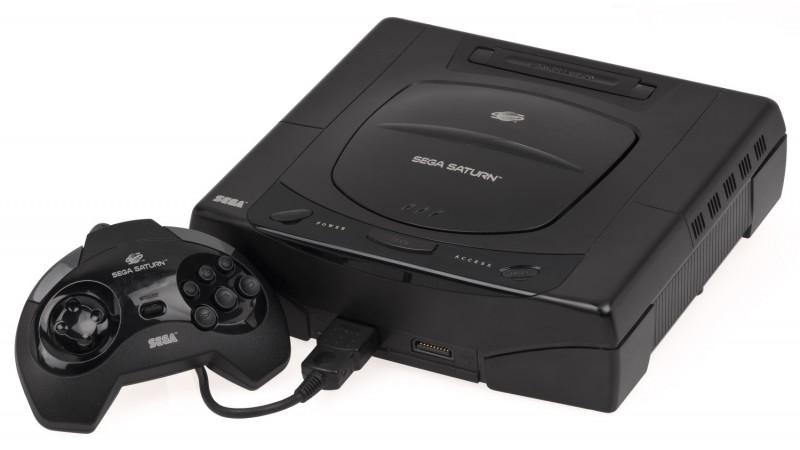
An thrilling blue mascot, a strong of unequalled approved sports activities titles, and an edgy advertising marketing campaign drove Sega from relative obscurity to problem Nintendo for console supremacy within the early ‘90s. The Genesis went toe-to-toe with SNES to make Sega a family identify.
With Sony’s first console looming and the Nintendo 64 simply over a yr away, the encore just about 5 years later proved a lot more tough. Following Genesis, fanatics had lofty expectancies for Sega’s Saturn to proceed the corporate’s momentum.
With a swell of hype raising Sony’s PlayStation, Sega sought after to introduce its console to fanatics with a bang, however ended up with a whimper because of a marvel North American release at E3.
Starting On The Wrong Foot
While players praised Genesis for its graphics and sound, cartridges had been being phased out in prefer of optical discs. Sega broke floor on optical disc building with its Sega CD add-on for the Genesis, however the Saturn was once the primary standalone Sega console to depend at the medium. Optical discs introduced enhanced polygonal rendering, higher sound, and complicated 3-d graphics that veered a lot nearer to what was once to be had in arcades on the time.
The Saturn hit Japanese retail outlets in overdue 1994, and all 200,000 gadgets bought out in an instant upon unlock. Fans and critics alike praised the sturdy Virtua Fighter port. Sega felt assured within the Saturn’s early Japanese efficiency, however that good fortune didn’t translate to North America.
When president and CEO of Sega of America Tom Kalinske took the E3 press convention level in May of 1995, he knew he was once about to make the unsuitable transfer. Kalinske was once now not simplest tasked with introducing the Saturn, but additionally surprising the arena with the announcement of its instant availability. Originally scheduled to release in September, the Japanese executives driven the release ahead to overcome Sony to marketplace. Kalinske, who performed a big function in making Sega so aggressive with Nintendo within the first position, vehemently disagreed with the verdict.
“When we had been going to release it within the fall, I believed that was once too early; I sought after to position it off till the next yr,” he says. “This was once one of the crucial primary causes I left Sega.”
Sega chairman and CEO Hayao Nakayama appeared previous Kalinske’s objections to release the machine proper from that E3 level. “Nakayama was once so involved over Sony launching a {hardware} platform that he sought after to overcome them to the punch,” Kalinske says.
Sony spoke back all through its personal keynote at that very same E3. Sony Interactive Entertainment CEO Olaf Olafsson introduced head of PlayStation building Steve Race on level for a “temporary presentation.” Race merely stated “$299.” This worth level undercut the Saturn through $100, and Race walked off the level to cheers.
The Fallout
The Saturn’s marvel release puzzled shoppers, however that was once just the beginning of Sega’s issues. Saturn was once simplest to be had at make a selection shops at release; the ones left at nighttime spoke back through losing strengthen for Sega merchandise. This betrayed Sega’s tireless efforts to win over shops within the prior technology after Nintendo attempted to stay competition out of the marketplace.
This rush to release additionally affected shoppers, who had a hard time discovering a shop with gadgets in inventory. Kalinske may just see the writing at the wall. “Everybody is aware of that it’s a must to have an good enough quantity of tool and sufficient video games at the {hardware} platform with a purpose to make it a success,” he says. “We didn’t have it. I may just see this was once going to be a failure.”
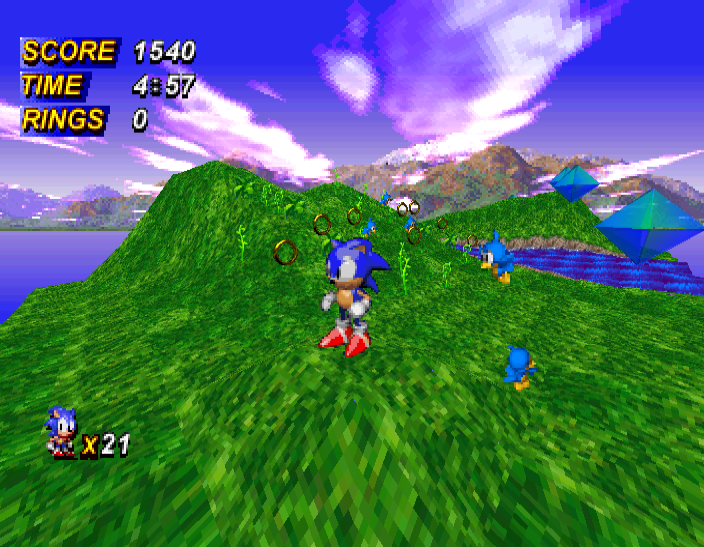
The most evident hollow within the Saturn’s tool lineup was once Sega’s mascot, Sonic the Hedgehog. A 3-d Sonic identify referred to as Sonic X-treme was once in building through STI whilst the core Sonic Team labored on Nights into Dreams, however a couple of snags ended in its cancellation. The Saturn was once the one standalone Sega platform not to function a singular mainline Sonic identify. “Clearly, it might have helped such a lot to have an ideal Sonic recreation at the Saturn release,” Kalinske says. “It would have made the entire distinction on this planet.”
Instead, Saturn introduced with a small, however first rate lineup. With video games like Daytona U.S.A., Virtua Fighter, and Panzer Dragoon, the release lineup was once now not with out its hits. However, following that window Sega was once hard-pressed to search out many blockbusters, and fan passion evaporated as soon as the PlayStation introduced in September with the promise of overwhelming third-party strengthen.

The Beginning Of The End
In 1996, Kalinske walked clear of Sega, with former Atari and Sony govt Bernie Stolar taking his position. Two years later, the Saturn was once discontinued after promoting simply over nine million gadgets international, a host dwarfed through its festival. The N64 has bought just about 33 million gadgets international, whilst the PlayStation reached greater than 100 million gadgets bought.
The Saturn’s failure started a downward spiral that endured with 1999’s Dreamcast. Though seen as a robust platform through many, the Dreamcast bought fewer gadgets than the Saturn international, and was once the general console Sega launched.
Following but any other failed console, Sega ceased {hardware} manufacturing altogether and become a third-party tool developer. Despite the Dreamcast in the long run burying the console department of Sega, Saturn was once a portent to Sega’s long term and served as the start of the downfall. It’s unimaginable to inform what the online game panorama would appear to be nowadays had the Saturn stood shoulder-to-shoulder with PlayStation and even Nintendo 64, however a sequence of deficient choices squandered any hope folks ever seeing that long term.
If you may have by no means observed Sega Saturn in motion, take a look at our Saturn show off episode of Replay.