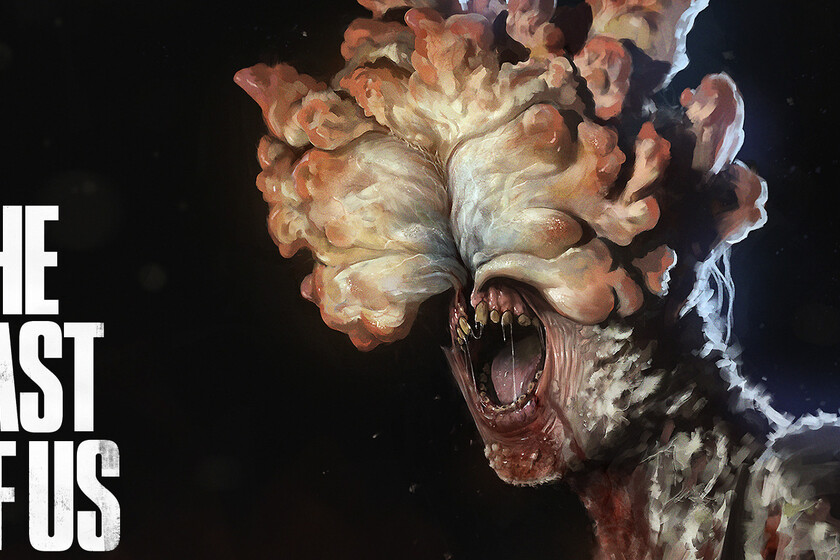
The fungus that turns ants into zombies that inspired him Naughty Dog for The Last of Us apocalypse is even more complex than the game showed. For starters, no talk of zombies as synonymous with infected.
Each and every one of the mushroom-faced humans that you unceremoniously blew away in The Last of Us and its sequel were, in fact, humans fully aware of what was happening. It was the cordyceps unilateralis that was responsible for moving the muscles against their will.
The real phenomenon that inspired The Last of Us.
When in the early 2000s, the BBC released the documentary Planet Earththe images shown in each of its episodes astonished the world. However, there was one episode in particular, episode 8 dedicated to the jungles, which affected the video game industry in a unique way.
Broadcast in April 2007 and narrated by Sigourney Weaver -instead of the classic voice of David Attenborough from the original version released a year earlier-, that episode would introduce to the masses, and to the team of. Naughty Dogone of the most impressive phenomena of the animal world: the attack of the cordyceps unilateralis.
The funguswhich attacks one type of ants but can also end up attacking other insects, takes possession of the host, makes it climb to the top of a plant near the nest, sticks its mandibles into the stem and begins to sprout from the body, thus taking advantage of the height to spread its spores.
The spectacular graphic document became the inspiration for The Last of Us pandemic. A cordyceps unilateralis such as that of these ants which, under the influence of an unknown virus, grew in power and ambition by also attacking humans, turning them into zombies that they infected by biting or reproducing these spores after death.
Much more than zombie ants
Both the success of the documentary and the success of the video game helped spread the name of cordyceps unilateralis and, among all those who were captivated by the impressive force of nature, there was a group of entomologists and biologists who took a special interest. They wanted to discover what was behind such a curious prodigy.
The result, as they reported in their paper for the U.S. National Academy of Sciences, is that the concept of the unchecked zombie was far removed from what the fungus actually caused. In fact, they found that it did not affect the brain, thus invalidating that the cordyceps to modify the ant’s behavior.
What they discovered was that the infection reproduced inside the ant’s body until it created a network of interconnected cells that acted only peripherally, taking over the muscles of its joints and moving the ant at will despite contrary commands issued by the intact brain.
So, if The Last of Us was inspired by and borrowed the name and operation of the cordyceps unilateralis to shape their monsters from beyond the grave and mycetology, we were actually shooting at infected who were fully aware of what was happening but could do nothing to prevent it. If The Last of Us 2 challenged our in-game spiral of violence, now the gates of heaven have just closed on us a little bit more.
Image | Thomas Wievegg


